
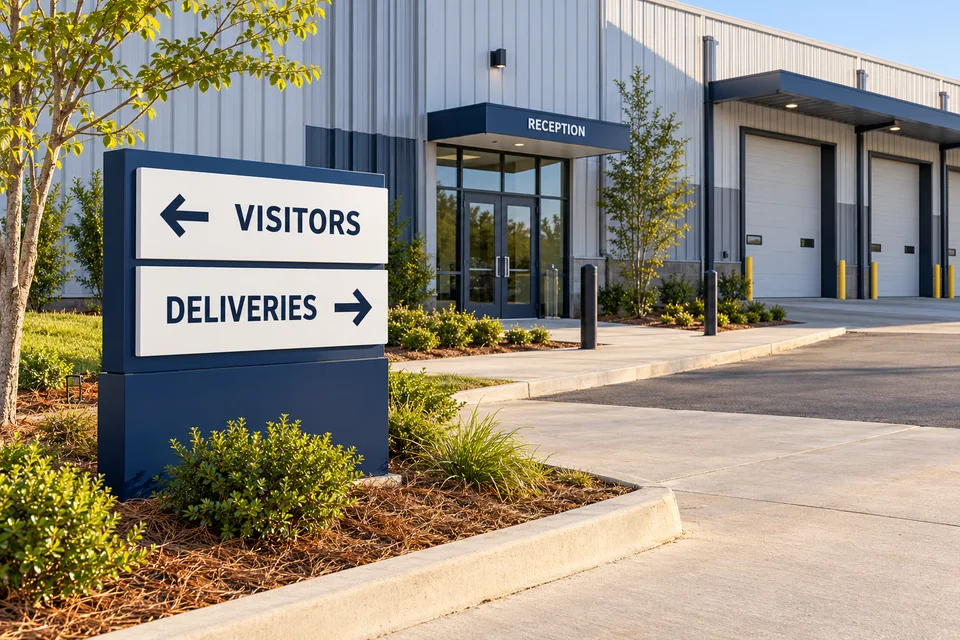
Large building lettering tells someone they have found the property. It may not tell them whether to turn toward reception, employee parking or the loading area. At a workplace with more than one kind of arrival, a useful sign plan follows the route from the entrance to the final destination.
Draw each journey before listing signs
Mark the visitor, staff and freight routes on a simple site plan. Note where they are shared and where they diverge. Add the parking and door each group should use. The purpose is to find decisions that need a message, not to cover the property with arrows.
A photograph of each decision point is more useful than a close-up of an existing sign alone. Include the view before a turn, not only after it. Tell the project team about gates, restricted areas and operating arrangements so directions can be reviewed with the people responsible for the site.
Use destination names consistently
If an appointment email says “Visitor Reception,” the signs should not alternate between “Main Office,” “Administration” and “Front Desk” without a reason. Establish a short approved list of destination names before designing panels. Consistent language lets a small sign confirm a larger message without forcing someone to interpret a new label.
For a manufacturing property or warehouse, include building and dock identifiers in the same review. Operational identification may need a different hierarchy from the main business identity.
Match the format to the decision
A ground-mounted post-and-panel sign might explain a driveway choice, while wall or door lettering confirms arrival. The right format depends on visibility, mounting, the reading distance and the site. Describe the purpose before selecting a product simply because it matches an existing sign.
Consider how directions are seen in normal operating conditions. Parked vehicles, landscaping and busy loading areas can alter the view. Share photographs and known constraints so proposed locations can be assessed rather than assumed to work.
Review the route as a complete system
Read the proposed messages in journey order. Does each one build on the last? Is a destination introduced before a driver needs to turn? Is the arrival confirmed at the correct door? Remove obsolete signs from the plan when they would send conflicting instructions.
For your first enquiry, send the site location, marked plan, route photographs and the approved destination names. Include who can review operations and installation access. Use our planning checklist, then share the routes your property needs to explain.