
A showroom may change its featured collection, window display or visitor program several times while the building identity stays in place. Treating every message as permanent can leave an entrance crowded and expensive to update. A useful sign plan starts by deciding what should remain recognizable for years and what needs to change with the presentation.
Give the lasting identity the strongest position
The showroom name should be easy to distinguish from a collection name or temporary announcement. Look at the approach from the street and from parking before deciding where the primary letters belong. A facade photograph helps compare the available wall area with doors, windows and neighboring signs. Explore building signs and channel letters with the actual architecture in view.
Keep the hierarchy clear in artwork as well. The business name, descriptor and entrance information do not need equal visual weight. Confirm the exact name used in invitations and appointment instructions so a first-time visitor sees the same destination on arrival.
Plan a separate layer for changing messages
Collection graphics and event details should be easy to update without disturbing the primary identity. Decide which window or interior surface can carry that information, how long it will remain and what should be visible when it is removed. Window vinyl can have a role, but the glazing, exposure and desired removal process need to be discussed.
A changing display should not hide the entrance or block a view that helps visitors understand the space. Photograph the glass from inside and outside. Check the arrangement with furniture and display lighting in place, rather than judging the graphic on an empty elevation alone.
Carry recognition through the threshold
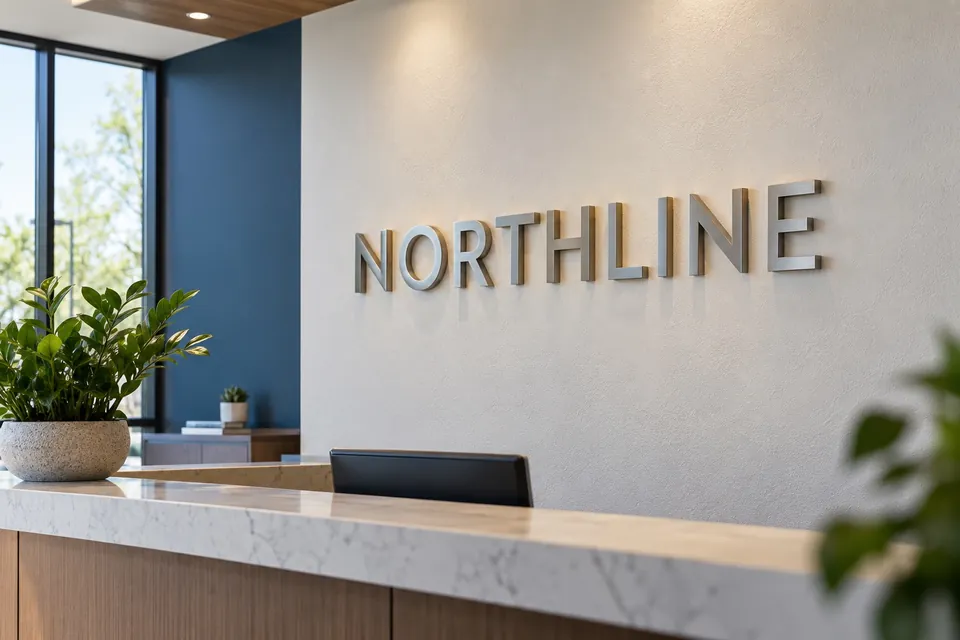
The name above the door introduces the location; reception lettering and directional details help the visitor settle in. Consider where guests pause, whether several collections or businesses share the property, and how appointments are greeted. Our retail sign guide connects these customer-facing decisions with suitable formats.
Agree what will change and who approves it
Make a simple sign schedule with a permanent or changeable designation for each item. Note artwork owners, property criteria, access requirements and the target installation sequence. This gives the project a clearer scope and makes future updates easier to brief. Before requesting an estimate, gather the project checklist details and tell us about your High Point showroom.